Sulfamate Nickel Plating: What It Is and When You Need It
Nickel plating is one of those terms that gets used loosely in manufacturing. People say “nickel plate it” the way they say “just weld it,” like there’s one thing happening when there are actually several, and the differences depend on what the part needs to do.
What Is It?
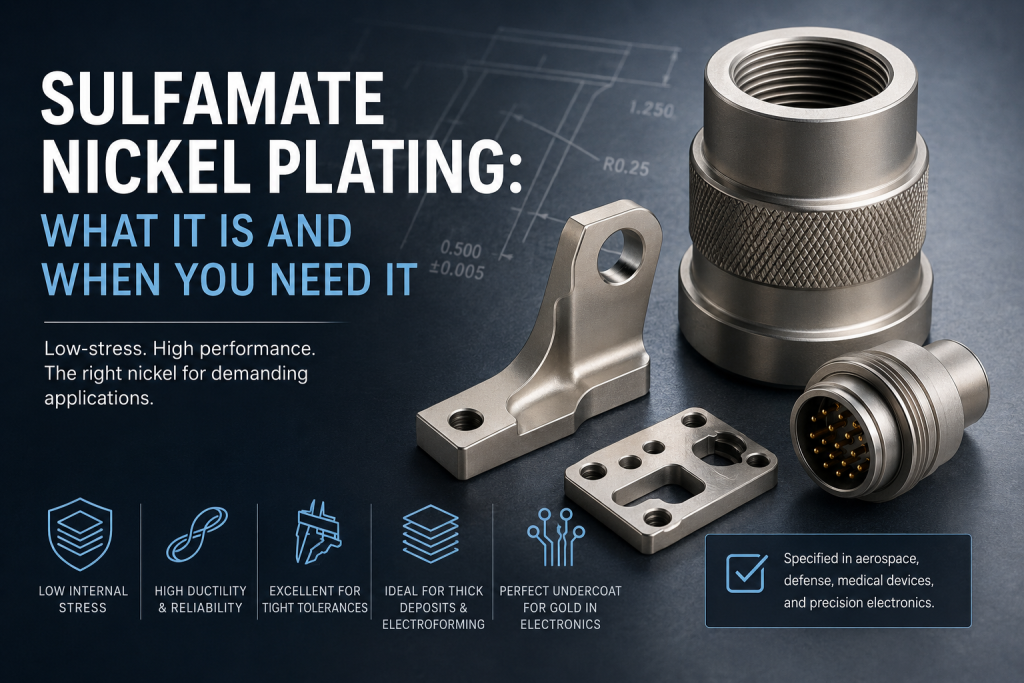
Sulfamate nickel gets its name from its basic chemistry — nickel sulfamate and sulfamic acid. It’s an electrolytic (applied with a rectifier) process that forms a highly ductile, corrosion resistant deposit, with low internal stress.
Internal stress is one of those things that doesn’t come up until it causes a problem, and then it causes a big one. Every plated deposit builds up some stress during the plating process. When that stress is high, you get brittleness. You get adhesion failures. You get cracking under load or when the part goes through temperature changes. Sulfamate nickel keeps internal stress very low, which is why it shows up in so many applications.
Where You Actually See It Specified
Aerospace is one area where sulfamate is frequently specified. Parts that spend their lives cycling through temperature extremes, vibrating, and generally being asked to not fail often receive sulfamate nickel. The deposit moves with the part rather than fighting it.
Electronics is a big one that surprises people who don’t come from that world. Sulfamate nickel is widely used as an undercoat for gold on connectors and contacts. It gives the gold layer a stable, low-stress base to sit on, and it has good solderability and bonding properties that matter in highly reliable electronics work.
Defense and medical devices both specify it regularly. Same basic reasons: tight tolerances, environments that aren’t forgiving, and no tolerance at all for coating failures.
Thick deposits are worth mentioning separately. You can build sulfamate nickel up to significant thicknesses without the stress accumulation that cracks or delaminates the deposit. Very thick deposits are a niche application but when it’s what you need, sulfamate nickel is an effective answer.
The Part That Trips People Up Most
Saying “nickel plate it” on a drawing without specifying which process is more common than it should be. Leaving the specification ambiguous means whoever’s running the process is making a decision that should have been made at the engineering stage.
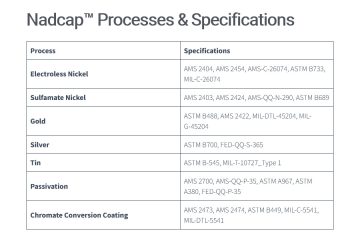
AMS 2403 and AMS 2424 are the specs that come up most often in aerospace and defense. If your drawing references nickel without a process call-out, that’s worth resolving before anything goes into production.
At AST we run sulfamate nickel regularly and we get into the spec details early. If you’re trying to figure out whether it’s the right call for your application, or you’ve got a drawing that needs a second set of eyes on the finishing requirements, reach out. That’s exactly the kind of thing we do.
Sulfamate Nickel Plating for Larger Components
Need to plate larger or more complex parts? AST’s 400-gallon sulfamate nickel plating tank accommodates components up to 36 inches in length, providing the capacity and process control needed for demanding production and prototype projects. Whether you need thick deposits, low internal stress, or compliance with aerospace and military specifications, our team can help determine the right plating solution for your application.